Quick answer
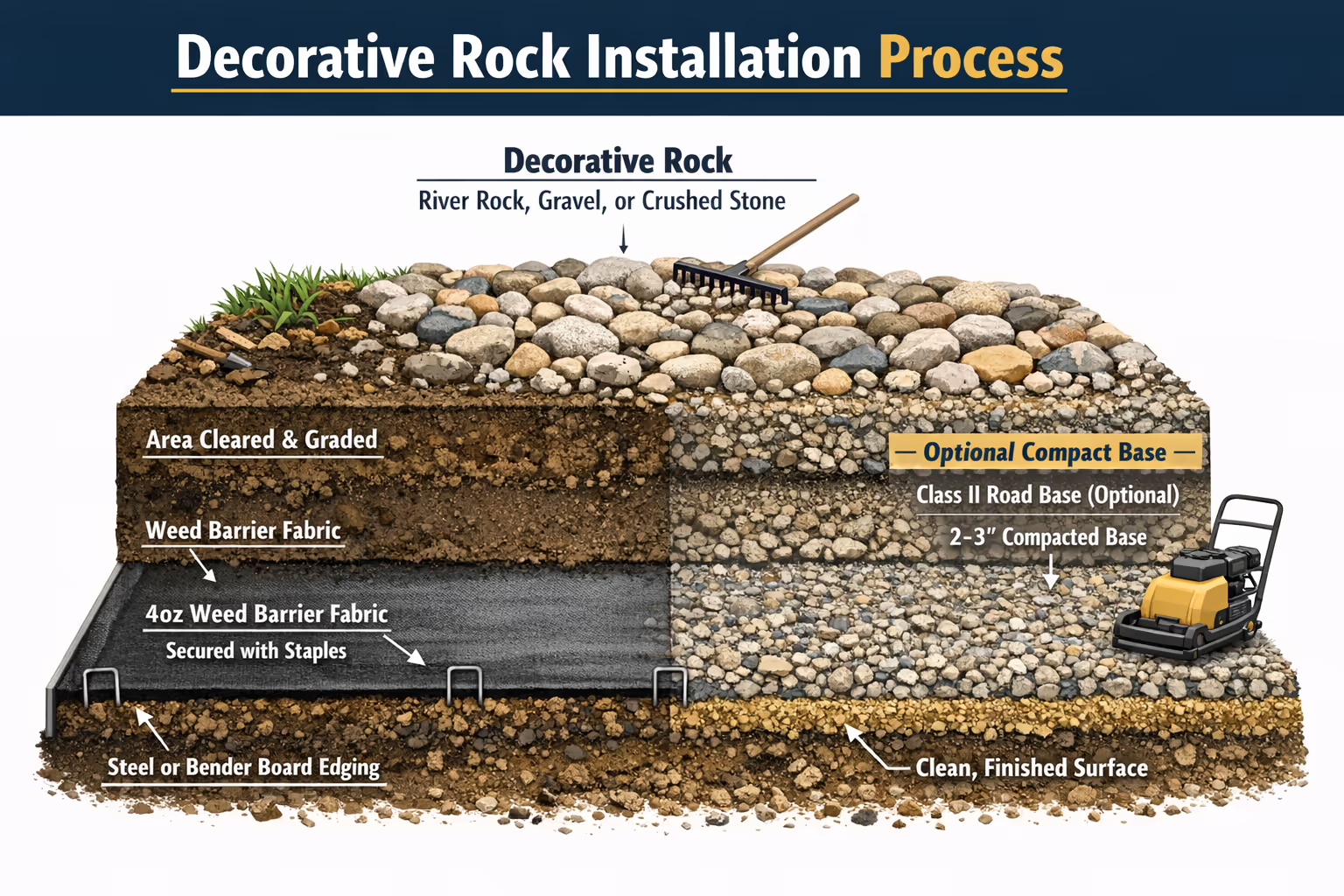
Most weeds seen in decorative rock are not necessarily growing through an intact barrier from the original soil. Windblown seeds often germinate in dust, decomposed leaves, and fine material that accumulates between the rocks on top of the fabric. Other weeds enter through seams, planting cuts, edges, punctures, irrigation trenches, or areas where the barrier has shifted. A heavy geotextile can reduce weed pressure, but no landscape fabric makes a rock yard permanently weed-free.
Weed barrier is a control layer, not a permanent seal
Landscape fabric is designed primarily to block light and make it harder for existing weeds and new seedlings in the underlying soil to reach the surface. It can also help separate decorative rock from the native soil. Those are useful functions, but they do not turn the landscape into a closed system.
A decorative-rock yard remains exposed to wind, dust, leaves, seeds, irrigation, runoff, animals, foot traffic, and maintenance activity. Over time, those forces create new places where weeds can germinate even when the original fabric remains mostly intact.
1. Seeds can germinate above the fabric
The most common misunderstanding is assuming every weed must have pushed upward through the geotextile. In many rock landscapes, the weed started above it.
Wind carries seeds and fine soil into the spaces between rocks. Leaves, flower parts, grass clippings, animal waste, and other organic material become trapped there. As that material breaks down, it forms a thin growing medium. It may be only a small pocket, but many annual weeds need very little soil to germinate.
This is why an older rock yard can develop more weeds than it had during its first year. The rocks did not suddenly stop working; the surface gradually collected enough fine material to support new seedlings.
2. Water creates favorable germination zones
Seeds need moisture. In the High Desert, the entire rock area may look dry while specific locations remain favorable for weeds:
- around drip emitters and leaking irrigation fittings;
- below roof edges or downspout discharge;
- along low spots where runoff collects;
- near shrubs that are watered regularly;
- beside concrete that redirects water toward the landscape; and
- under deeper accumulations of dust and organic debris.
A repeated wet spot can support weeds even when the surrounding yard receives almost no water.
3. Seams, cuts, edges, and penetrations are vulnerable
Weed barrier must be cut around plants, valve boxes, pipes, drains, lights, posts, and hardscape. Separate fabric sheets also require overlaps. These locations are not defects by themselves, but they are pathways where sunlight may reach the soil or where roots and shoots can find an opening.
Problems become more likely when:
- fabric overlaps are too narrow or pull apart;
- planting openings are much larger than the plant;
- the material stops short of the edging;
- irrigation repairs leave an uncovered trench;
- rock movement exposes the fabric or underlying soil; or
- stakes, tools, traffic, or later construction puncture the barrier.
4. Some established weeds do not behave like new seedlings
A fabric layer is most effective when existing vegetation and persistent roots are addressed before installation. Certain perennial weeds can return from crowns, deep roots, rhizomes, or underground structures. They may travel laterally until they reach an edge, seam, or opening.
The correct diagnosis matters. A shallow seedling growing in surface debris is a different problem from a deeply rooted perennial emerging repeatedly from the same location.
5. Decorative rock and fabric change with time
Rock is moved by foot traffic, pets, raking, runoff, wind, vehicles, and maintenance. The native soil can settle. Fabric can stretch, shift, become exposed, or be damaged during later work. Fine particles may also work downward while organic material accumulates above.
Even a high-quality woven geotextile cannot prevent every future disturbance. Heavier material generally resists tearing and separation better than a thin sheet, but thickness alone cannot stop airborne seeds from germinating above it.
How to determine where the weeds are coming from
Before adding more fabric or applying a treatment, inspect several representative weeds.
- Pull one carefully after the soil is slightly moist. A tiny, shallow root ball surrounded by loose debris usually indicates surface germination.
- Move the rock aside. Look for accumulated dust and decomposed material above the fabric.
- Find the fabric opening. If the root passes below the barrier, determine whether it is at a seam, edge, cut, or puncture.
- Check the moisture source. Inspect nearby emitters, valves, runoff paths, and low areas.
- Watch the pattern. Scattered seedlings across the surface suggest windblown seed. Repeated growth in the same exact spot may indicate a persistent root system or recurring water source.
What actually reduces weeds in decorative rock
Remove weeds before they produce seed
Young weeds are generally easier to remove and have not yet added another generation of seed to the site. Waiting until weeds mature makes future control more difficult.
Keep the rock surface clean
Regularly blow or remove leaves, grass clippings, seed pods, and accumulated debris before they decompose. This is one of the most important maintenance steps because it removes the material in which new seeds germinate.
Correct localized water problems
Repair leaks, adjust misplaced emitters, and correct small drainage pockets where practical. The goal is not to deprive intended plants of water, but to avoid repeatedly wetting unnecessary areas.
Repair exposed or separated barrier selectively
Where an actual opening is found, move the rock, remove the weed and root material, repair the overlap or damaged section, and replace the rock. Installing another complete layer over the entire yard is rarely the first diagnostic step.
Maintain adequate, even rock coverage
Bare spots expose fabric to ultraviolet light and physical damage. Extremely deep rock, however, can trap more fines and make cleaning difficult. The appropriate depth depends on rock size, intended use, edging, slope, and site conditions.
Use weed-control products carefully
Preemergent and postemergent herbicides may be appropriate in some landscapes, but the correct product depends on the weed, season, nearby plants, drainage, pets, and label restrictions. Always follow the current product label and applicable regulations. When the situation is uncertain, consult a qualified pest-control or horticultural professional rather than relying on a generic home remedy.
Would thicker fabric have prevented every weed?
No. A heavier geotextile may improve durability, soil separation, and resistance to punctures. It may also reduce weeds emerging from below when properly installed. It still cannot prevent windblown seeds from landing above it, organic debris from accumulating, irrigation from creating a wet pocket, or roots from exploiting openings.
The realistic objective is substantially reduced weed pressure and easier maintenance, not a promise that no weed will ever appear.
Why this is especially noticeable in the High Desert
High Desert landscapes experience frequent wind, blowing dust, sparse surface cover, intense sunlight, and irrigation concentrated around individual plants. Wind delivers both seed and mineral particles. Plant debris then becomes caught between the rocks, while isolated wet zones allow germination. These conditions can make a clean rock landscape develop scattered weeds even when the original installation included a substantial barrier.
The practical conclusion
When weeds appear in decorative rock, the correct question is not only, “Did the fabric fail?” The better questions are: Where did this plant germinate? Where is its moisture coming from? Is it rooted above or below the barrier? Is there a seam, edge, cut, or persistent root system?
That diagnosis leads to a more durable solution than simply covering the problem with another layer of material.
Project evidence
How this project was evaluated and built
Original challenge
Work performed
Materials and systems used
Outcome
Key takeaways
- Landscape fabric reduces weed emergence from below but does not stop airborne seeds.
- Dust and decomposed organic debris can form a new growing layer above the barrier.
- Moisture near emitters, runoff paths, and low spots creates concentrated germination zones.
- Seams, plant openings, edges, punctures, and later repairs are common pathways.
- Surface cleaning, early removal, irrigation correction, and targeted fabric repair are more useful than assuming every weed requires a second full layer.
- A properly built rock landscape is lower-maintenance, not permanently maintenance-free.
Frequently asked questions
Questions homeowners commonly ask
Are the weeds actually growing through the fabric?
Sometimes, especially at seams, cuts, damaged areas, or where persistent roots remain. Many weeds, however, germinate in debris that has accumulated on top of the barrier.
Should a second layer of weed barrier be installed?
Not automatically. First identify whether the weeds originate above the existing fabric, through a localized opening, or from a persistent root system. A second layer will not stop future seeds from germinating in material that accumulates above it.
Does more decorative rock eliminate weeds?
Additional rock may improve coverage in thin areas, but it is not a complete solution. Deep rock can still collect dust and organic material, and seeds may germinate wherever moisture is available.
Can plastic be used instead of permeable fabric?
Impermeable plastic may interfere with drainage, irrigation, soil gas exchange, and plant health. The appropriate separator depends on the landscape design and whether water must pass through the area.
Is weed barrier still worthwhile?
It can be useful beneath decorative rock for soil separation and suppression of weeds emerging from below. Its limitations should be understood, and the surface still requires periodic maintenance.
Sources and further reading
Research used for this resource
- University of California Statewide Integrated Pest Management Program: Common Knotweed — a UC peer-reviewed Pest Note covering compacted and gravel areas, mulch and fabric use, seed prevention, and early removal.
- Better Homes & Gardens: How to Use Landscape Fabric to Control Weeds — a practical overview of appropriate uses, installation, surface-debris removal, and maintenance limitations.
- Associated Press: Why Landscape Fabric Is Often a Bad Idea for Your Garden — horticultural commentary explaining long-term debris accumulation, root penetration, and the distinction between planted beds and stone pathways.
Sources should be reviewed periodically because pesticide guidance, product availability, and extension recommendations can change.
Practical next step
Planning or repairing a decorative-rock landscape?
Kreative Gardens can evaluate grading, drainage, weed-barrier failures, edging, irrigation conflicts, and material conditions before recommending a repair or redesign.